Introduction: Why the Right Gear Matters More Than Parents Think
Teaching kids how to ride a bike or explore the outdoors is one of the most rewarding parts of parenting. It builds confidence, balance, independence, and a lifelong love for movement.
But here’s something many parents underestimate:
Most childhood riding injuries aren’t caused by “dangerous riding” — they’re caused by the wrong gear or poor fit.
A bike that’s too big.
A helmet worn too loose.
Missing knee or elbow protection.
Small mistakes like these dramatically increase fall risks.
This guide will walk you step-by-step through:
- How to choose the right bike size
- When kids should start riding
- Helmet safety standards every parent should know
- Proper helmet fitting techniques
- Essential outdoor safety gear
- Real-world riding tips from experienced parents
- A practical gear checklist
- FAQs parents often ask
By the end, you’ll know exactly what your child actually needs — and what you can skip.
1. When Should Kids Start Riding?
Every child develops differently, but most follow this pattern:
Ages 2–3
Best time to start with a balance bike
- Builds coordination
- Teaches steering naturally
- No pedals = less fear
Ages 4–6
Transition to small pedal bikes
- 14–16 inch wheels
- Training wheels optional
- Focus on braking skills
Ages 6–9
Confidence stage
- 18–20 inch bikes
- Longer rides
- Neighborhood cycling
9+ years
Skill development
- 24 inch+ bikes
- Trail riding
- Mountain or hybrid bikes
The key isn’t age — it’s height + leg length + confidence.
2. How to Choose the Correct Bike Size (Most Important Section)
Buying a bike “they’ll grow into” is the #1 mistake parents make.
A bike that’s too large:
- Harder to balance
- Slower reaction time
- Higher fall risk
- Less confidence
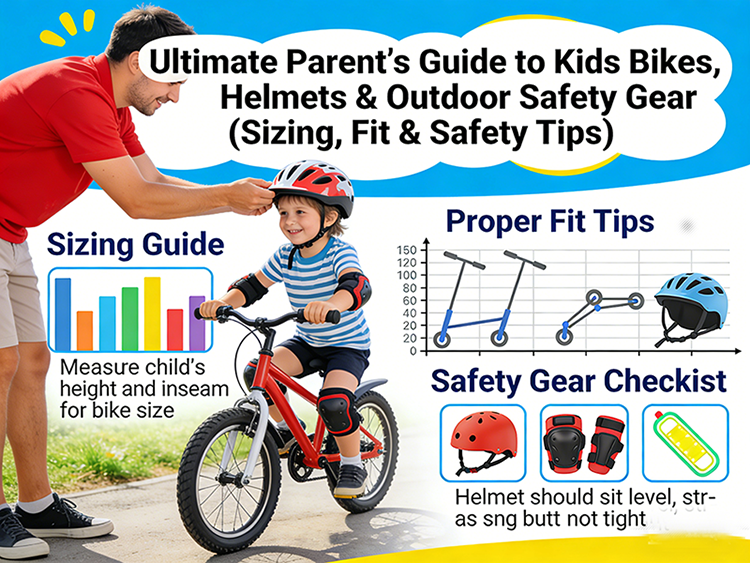
Use height and inseam instead of age
Here’s a practical sizing chart:
| Height | Inseam | Wheel Size | Typical Age |
|---|---|---|---|
| 85–100 cm | 35–42 cm | 12″ | 2–3 yrs |
| 100–115 cm | 40–50 cm | 14″–16″ | 4–5 yrs |
| 115–130 cm | 48–60 cm | 18″–20″ | 6–8 yrs |
| 130–145 cm | 60–70 cm | 24″ | 9–11 yrs |
| 145+ cm | 70+ cm | 26″ | 11+ yrs |
Quick fitting test
When sitting on the seat:
✅ Feet should touch ground lightly
✅ Knees slightly bent
✅ Child can start/stop without help
If they must tiptoe → bike is too big.
3. Helmets: Non-Negotiable Safety Gear
If you buy only ONE piece of safety equipment, make it a helmet.
Studies consistently show helmets reduce head injury risk by up to 60–80%.
But not all helmets are equal.
Look for these safety certifications
Always check for:
- CPSC (US safety standard)
- ASTM
- CE EN 1078 (Europe)
If a helmet doesn’t show one of these labels — skip it.
Cheap uncertified helmets often fail real crash tests.
4. How to Properly Fit a Kids Helmet
A $100 helmet worn incorrectly protects worse than a cheap one worn correctly.
Follow the 2–V–1 rule
1. Two fingers above eyebrows
Helmet sits low on forehead
Not tilted back
V. Straps form a V under ears
Adjust side straps snugly
1 finger under chin strap
Tight but comfortable
Test
Shake head → helmet shouldn’t move
5. Essential Outdoor Safety Gear Checklist
Helmets are step one. But for beginners, extra protection boosts both safety and confidence.
Must-have
✔ Helmet
✔ Closed-toe shoes
✔ Proper size bike
Highly recommended
✔ Knee pads
✔ Elbow pads
✔ Gloves
✔ Water bottle
✔ Reflectors or lights
Optional but useful
✔ Bell
✔ Bike lock
✔ Small backpack
These items reduce scrapes, fatigue, and small accidents that discourage kids.
6. Real-World Riding Tips Parents Learn the Hard Way
These practical tips matter more than expensive gear.
Start in empty spaces
Parking lots or parks > sidewalks or roads
Practice braking first
Teach stopping before speed
Short rides win
15–20 minutes builds confidence better than long rides
Check bike before every ride
- Tire pressure
- Brake function
- Chain smoothness
Ride together
Kids copy adult behavior
7. How to Choose Quality Gear (Without Overspending)
Parents often ask: “Do I need premium brands?”
Not necessarily.
Spend more on:
- Helmet
- Bike frame quality
- Brakes
Save money on:
- Pads
- Gloves
- Accessories
Comfort and fit matter more than brand names.
8. Common Mistakes Parents Make
Avoid these:
❌ Buying too big to “grow into”
❌ Skipping helmet for short rides
❌ Riding near traffic too early
❌ Cheap no-name helmets
❌ Long rides on day one
Small corrections = safer kids.
9. Frequently Asked Questions
Q: Balance bike or training wheels?
Balance bikes teach coordination faster and lead to earlier independent riding.
Q: How often should helmets be replaced?
After any crash or every 3–5 years.
Q: Are knee pads necessary?
For beginners, yes. They reduce fear and injuries.
Q: Can kids use adult helmets?
No. Fit must be snug and child-specific.
Final Thoughts
Getting kids outside, riding bikes, and exploring nature is one of the best investments you can make in their health and confidence.
The right gear doesn’t have to be expensive — it just has to fit well and meet safety standards.
Start simple:
- Proper size bike
- Certified helmet
- Basic protection
- Safe practice area
Everything else is optional.
Safety first, fun second — and the fun lasts a lifetime.